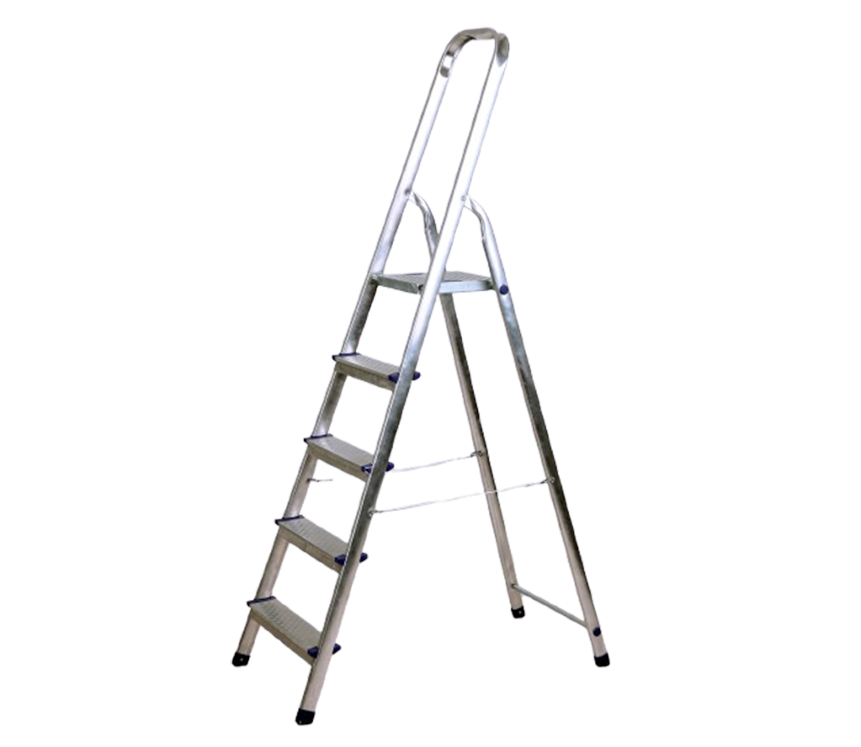
Aluminum ladders are some of the most common types of ladder that are used in residential, commercial and industrial areas. They are favored by professionals and also homeowners for their lightweight design, great strength, corrosion resistance and long service life. Regardless if you are using a ladder for warehouse work, construction or facility management, a proper aluminum ladder is a key component to safety, productivity and efficiency.
Not all ladders are appropriate for all task. The height you'll need to climb, the working environment, the weight capacity and the type of work all significant factors play an important role in choosing the right ladder. The selection of the improper ladder can lead to accidents, less efficiency in the work and also to damaging the equipment.
This guide covers the various types of aluminum ladders that can be used for various purposes and what type you should choose for yourself.
Why Choose Aluminum Ladders?
Aluminum and steel ladders are the preferred metals for use because of their strength and lightweight. When compared to many materials, aluminum is extremely durable, lightweight and easily manipulated.
The benefits of some of these are:
- Easy to carry and lightweight
- High strength-to-weight ratio
- Rust and corrosion resistance
- Long service life
- Low maintenance requirements
- Suitable for indoor and outdoor applications
- Easy to move between work locations
Understand Your Application before Buying
Before choosing an aluminum ladder, the first thing to consider is where and how it will be use.
There are varieties of ladder designs available, depending on the industry. For instance, a platform ladder may be needed to provide comfortable standing space for a warehouse work, while a straight ladder might be required for an electrician's installation at a high level.
Think about the following questions:
- What is the maximum length of the carrying arm?
- What conditions will the ladder be used in – indoor or outdoor?
- How often will it be used?
- What will be the use of it by one or more workers?
- Does the task involve working on the ladder for long periods of time?
- Is portability important?
These questions help determine the best type of ladder.
Select the suitable ladder height
The single most common error is choosing the wrong size ladder or the wrong height.
The ladder should enable the user to work freely without standing on the top step or reaching out of the normal limits of the ladder.
Generally:
- Low-height tasks require compact ladders.
- Medium-height maintenance work requires platform or step ladders.
- High-access industrial work requires extension or tower ladders.
Keep in mind that your working height is higher than the height of the ladder, since you can reach upward from the platform.
With the right height of aluminum ladders, safety and productivity are enhanced.
Consider the Load Capacity
All ladders have a weight capacity limit.
This includes:
- User weight
- Clothing
- Tools
- Equipment
- Materials being carried
Do not overload according to manufacturer's recommendations. Heavier ladders may be needed in industrial workplaces due to extra tools and safety equipment.
Select the Right Aluminum Ladder Type
There are different types of aluminum ladders for various occupations.
Step Ladder
Step ladders are not dependent on a wall for support.
They are commonly used for:
- Office maintenance
- Retail stores
- Residential repairs
- Electrical work
- Painting
Their compact design makes them ideal for quick access tasks.
Platform Ladder
Platform ladders provide a larger standing surface that allows users to work comfortably for longer periods.
These ladders are suitable for:
- Warehouses
- Inventory management
- Assembly operations
- Production facilities
- Maintenance work
The platform improves stability and reduces worker fatigue.
Extension Ladder
Extension ladders are designed for reaching higher elevations.
They are widely used for:
- Exterior building maintenance
- Roofing work
- Construction projects
- Utility maintenance
They require proper support before use.
Aluminum Tower Ladder
Aluminum tower ladders provide enhanced stability for prolonged work at height.
They are suitable for:
- Industrial maintenance
- Factory inspections
- Commercial buildings
- Airports
- Large warehouses
Their wider structure offers additional safety during extended work.
Check the Working Environment
The work environment significantly affects ladder selection.
Indoor Applications
Indoor work generally requires:
- Lightweight construction
- Easy mobility
- Compact storage
- Smooth floor compatibility
Examples include:
- Shopping malls
- Offices
- Hospitals
- Educational institutions
Outdoor Applications
Outdoor environments require ladders that can withstand:
- Rain
- Moisture
- Sunlight
- Dust
- Temperature changes
In the conditions of the open air, aluminum naturally resists corrosion.
Check Safety Features
Safety should top criteria for choosing an aluminum ladder. Look out for the following characteristics:
- Anti-slip steps
- Wide base for stability
- Strong locking mechanisms
- Slip-resistant feet
- Reinforced joints
- Comfortable handrails
- Secure platform support
These features help reduce workplace accidents and improve user confidence.
Think About Storage Space
Storage is another important consideration. If space is limited, choose ladders that are:
- Foldable
- Compact
- Easy to store
- Convenient to transport
Proper storage also helps extend the life of the aluminum ladder.
Durability Matters
A good quality aluminum ladders should have:
- Strong frame construction
- Precision welding
- Corrosion resistance
- High-quality fasteners
- Durable anti-slip components
Routine checks and maintenance continue to prolong equipment life.
Avoid these Common Mistakes
Most accidents are due to wrong selection or use of ladders.
- Choosing the wrong ladder height
- Ignoring weight capacity
- Using damaged ladders
- Standing on the top step
- Placing ladders on uneven surfaces
- Skipping regular inspections
- Using indoor ladders for heavy industrial work
Proper ladder selection significantly reduces workplace risks.
Applications of Aluminum Ladders across Industries
Aluminum ladders use in many industries because of their versatility.
Common applications include:
- Manufacturing plants
- Warehouses
- Logistics centers
- Airports
- Shopping malls
- Hotels
- Hospitals
- Educational institutions
- Construction projects
- Electrical maintenance
- Telecommunications
- Facility management
- Residential maintenance
Each industry benefits from the combination of strength, portability, and durability offered by aluminum ladders.
Why Choose BOB Engineering Co.?
BOB Engineering Co. is committed to providing high-quality material handling and access solutions that meet the needs of various industries. The company manufactures durable and reliable ladder systems built for safety, performance, and long service life.
As an experienced scissor lift manufacturer, we also offers reliable lifting solutions for industrial applications. Our hydraulic goods lift is ideal for transporting goods safely and efficiently between different floor levels in industrial and commercial facilities.
Conclusion
Choosing the right aluminum Ladders isn't exclusively the highest or the lowest in cost, but rather the right choice from a range of options. The height at which you are working, the application, load capacity, environment, portability and safety features will all determine the ideal ladder you should choose.