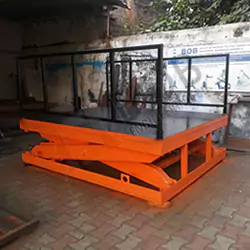
When it comes to lifting equipment, it is a crucial decision for any industrial business. From manufacturing facilities, to warehouses, workshops, production centres to logistics hubs, the right lifting solution can simplify, safe and efficient the handling of materials.
A Hydraulic Scissor Lift is an effective solution for industries that require raising and lowering materials to various working levels. It uses hydraulic power and a scissor mechanism to provide controlled vertical movement. It can be used for material positioning, loading and unloading, production, maintenance or lifting activities, depending on the application.
When buying a lifting system, buyers are not just looking for equipment that has a certain lifting capacity. Platform size, lifting height, frequency of application, installation space, safety features, maintenance requirements and the material to be lifted are also important factors to consider.
This guide covers the features of a scissor lift hydraulic lift and the most important considerations to keep in mind when buying a hydraulic lift.
What is a Hydraulic Scissor Lift?
A hydraulic scissor lift is a lifting platform that has the capacity of moving upward and down in a vertical plane, and is operated by the use of a hydraulic system. It is typically composed of the hydraulic power unit, base frame, scissor arms, hydraulic cylinders and a platform.
The hydraulic system creates the pressure, which causes the cylinder to push the scissor arms up and move the platform. On lowering the lifting mechanism, the platform slides back downwards in a controlled way.
Different sizes and capacities are available, so that businesses can choose the equipment best suited to their needs.
When purchasing it is crucial to understand exactly what you are looking for the lift to do. A lift for heavy loads in a warehouse may have different specifications than the one used for a production line positioning.
For what reason Do You need Hydraulic Scissor Lift?
A common reason for buying lifting equipment for many businesses is to make everyday tasks easier. Manual lifting tasks can be physically demanding, particularly when lifting heavy objects repeatedly.
A hydraulic scissor lift offers mechanical support and it can lift materials to a desired height through a controlled lifting system.
For the buyers, the most significant benefits may be:
- Easier vertical material handling
- Reduced manual lifting effort
- Controlled lifting and lowering
- Better material positioning
- Support for repetitive industrial operations
- Efficient use of vertical space
- Options for different load capacities
- Availability of application-specific configurations
The benefits depend on the equipment specifications and how it is used within the facility.
Makes Heavy Material Handling Easier
Safety is one of the primary reasons for using lifting equipment in businesses to minimize the effort required to move heavy materials.
In many industrial facilities, it is necessary to shift some parts, products, machine parts, containers etc., or loads of all these kind to different levels. This task can be time consuming and require significant physical effort.
A hydraulic scissor lift can then be used to lift the load to the desired position using a platform. This will simplify the handling process and minimize unnecessary manual lifting.
When a similar lifting action is used numerous times in the working day, this can be very beneficial to a business.
Helps Improve Workplace Safety
When buying industrial lifting equipment safety is an important consideration.
Without the proper procedure and processes, heavy loads may be handled manually, which can impose a lot of unnecessary strain on the body and raise the risk of accidents. A suitable lifting platform can provide a more controlled method of raising and lowering materials.
Safety features include limit switches, emergency stop controls, safety rails, anti-slip platform surfaces, and more, depending on the application and model.
Safety should be discussed with the buyer, and features chosen based on the application. Additionally, operators need to be trained and equipment needs to be operated within the rated capacity.
Saves Time during Repetitive Lifting Tasks
When your employees have to lift materials frequently from one elevation to another, this can be a time-consuming task.
These repetitive tasks can be made easier with a hydraulic scissor lift. The lifting platform can be used to move materials up or down to the desired level—rather than manually.
This can make operations more efficient and give staff the opportunity to be engaged in other production or handling tasks.
For the buyer, the cost of the equipment is not the only factor that should be considered, but the overall suitability of the workflow.
Available in Different Load Capacities
Each company has unique lifting needs. Certain ones require the transfer of lighter industrial materials, and some have to be used for heavy industrial materials.
There are various sizes of the hydraulic scissor lifts. One of the most crucial choices made while buying the equipment is choosing the proper capacity.
Before choose a supplier, make a list of:
- Maximum load weight
- Average operating load
- Platform size required
- Required lifting height
- Frequency of lifting
- Type of material being handled
Do not choose a lift just because it is more powerful. Full equipment specification should be suitable for your use.
Helps with Different Working Heights
Materials can have to be raised to various heights in industrial processes.
For example, a production workstation may require materials to be raised to a convenient working height. In a warehouse, loads can require specific positioning on a specific platform level.
When the lifting height and equipment configuration are suitable, a hydraulic scissor lift can meet these requirements.
When buying, check the lower and upper working position. This will assist the supplier in recommending a suitable lifting arrangement.
Makes Better Use of Available Space
In lots of factories and warehouses, floor area is valuable.
The main use of a scissor lifting system is to move loads up and down, particularly when the business does not need to cover much horizontal distance.
This makes the equipment well suited for numerous applications where space is limited.
However, buyers should consider more than the equipment's dimensions. Space is also required for loading, unloading, operation, maintenance, and safe access around the lift.
Useful for Warehouses and Manufacturing Units
In warehouses and manufacturing units, a hydraulic scissor lift can be used for a number of activities.
It can be used for material positioning, production support, loading and unloading, transferring material between working levels and other vertical lifting needs.
For example, materials can be raised to a suitable level before they are transferred to another work area. This can help minimize extra movement and streamline the handling process.
The configuration needed is dependent on load, working height, space requirement and usage frequency.
Supports Production and Assembly Work
In manufacturing, it is frequently necessary to have components at a convenient height.
Materials will be repeated picked, checked, assembled or positioned by workers during production. A lifting platform can be used to elevate materials to the desired working height.
This may make repetitive operations easier and keep the process running smoothly. When buying equipment for production use, consider the operating frequency.
Supports Loading and Unloading Operations
The elevation of one floor from another, platform to platform, vehicle to platform and platform to work area may cause difficulty with loading and unloading.
A suitable hydraulic lifting system can help raise materials to the required level before transferring them to another surface.
For example, a business may use a lift to position materials at a suitable height for transfer between a loading area and another working level.
If your primary requirement is transporting goods vertically between floors, a dedicated goods lift may be a more suitable solution. The correct equipment depends on the intended use.
Can Be Customized for Your Application
Each industrial facility is different and has unique requirements.
A standard lifting platform may not always be suitable, depending on the location, load size and working height. Hydraulic scissor lifts can be customized based on the application.
Buyers may need to discuss factors such as:
- Platform dimensions
- Maximum load
- Lifting height
- Installation area
- Operating method
- Loading method
- Safety requirements
- Frequency of operation
Can Be Used Across Multiple Industrial Applications
Hydraulic scissor lifts can be used in various business operations and can fit different types of businesses.
Depending on the configuration, the applications include:
Manufacturing
Used for material positioning, assembly support, production processes, and handling components.
Warehousing
Used for lifting and positioning materials during storage and handling activities.
Engineering Workshops
Useful for handling machinery components and supporting maintenance-related lifting requirements.
Logistics
Can support loading, unloading, and material transfer operations where controlled vertical lifting is required.
Industrial Maintenance
It may be used to position equipment or materials at suitable working heights, subject to the application's safety requirements.
Hydraulic Scissor Lift Maintenance
The first step is not necessarily an appropriate purchase of equipment. Regular maintenance is important for reliable long-term operation.
Check for leaks, damaged hoses, and other problems in the hydraulic system. Scissor arms, pins, rollers, platform parts and other moving parts should also be inspected regularly.
If unusual noises, vibrations, jerky movement, or hydraulic leaks are noted, they should be investigated immediately.
Maintenance shall be according to the manufacturer's guidelines and operating conditions of the equipment.
Hydraulic Scissor Lift vs. Other Lifting Equipment
There are various kinds of lifting products available for various purposes.
For example, an aluminum ladder can be suitable for access and light-duty elevated work where a lifting platform is not required.
A hydraulic goods lift is normally used when lifting loads between floors or levels from vertical is the primary requirement.
A hydraulic scissor lift can be beneficial for lifting and placing materials at various working levels.
The proper selection will depend upon the desired objectives of the equipment.
Why Choose BOB Engineering Co.?
BOB Engineering Co. is a supplier of material handling equipment for industrial applications and knows that various businesses have their own lifting needs.
The company can assist the buyer in considering the important aspects of the lifting equipment, such as the capacity of lifting load, the height of lifting, the size of lifting platform, operating environment, installation and adjustment requirements, etc.
When ordering a hydraulic lifting system, it is a good idea to discuss all application requirements with BOB Engineering Co. before ordering the system. Data regarding material weight, lifting height, platform size, working environment and daily use can guide in choosing an appropriate solution.
How to choose the right Scissor Lift supplier?
The selection of equipment is not the final selection; the selection of the right supplier is also very crucial.
A trustworthy scissor lift manufacturer should have the capacity to understand your application and give you clear information on capacity, lifting height, platform size, operating requirements, safety countermeasures and maintenance.
After sales support, spare parts, installation assistance and maintenance guidance are also important factors to consider.